Our Thinking

Land, Nature and Justice: A COP30 Overview

26 November 2025 / WORDS BY Kirsty Galloway McLean

UNFCCC’s COP30 was held in Belém, gateway to the Brazilian Amazon, and sold as the “Indigenous COP” and the “COP of Truth”. It was also supposed to focus on implementation – it’s clear what we have to do, but we still need to agree on how we are going to make it happen. 

For those of us working at the intersection of climate, nature and Indigenous stewardship, the big takeaway from COP30 is this: land rights and Indigenous governed territories are now formally recognised as climate solutions, and there is political will to provide adaptation finance – but the fossil‑fuelled, extractive political economy that drives climate and nature loss remains largely unchanged. 

This overview walks through the key outcomes by theme, with sections on: 

  1. Big picture overview 
  2. Indigenous Peoples’ rights and justice in the core COP texts (Global Mutirão, JTM, gender & knowledge)
  3. Land, forests and finance (who gets what) 
  4. Climate–nature overlaps
  5. So what? Implications for climate, nature and justice
  6. What happens next?

1. Introduction (the ‘big picture’)


1.1 Why was Climate COP30 branded the ‘Indigenous COP’?

  • Location & symbolism: COP30 took place in Belém, gateway to the Brazilian Amazon – home to hundreds of Indigenous peoples – and was explicitly framed by Brazil as a “COP of the forest” and of climate justice. 
  • Record Indigenous presence: Over 3,000 Indigenous delegates from Brazil and around the world came to Belém – the largest Indigenous turnout in COP history – with several thousand more mobilizing in parallel spaces and street marches. 
  • But visibility ≠ power: Despite high visibility, only a small share of Indigenous participants had passes to actual negotiation rooms, and many leaders describe persistent exclusion from decision making, calling COP30 “a peoples’ COP without the peoples.” 

1.2 What changed for Indigenous Peoples and nature?

  • High-level recognition of rights: COP30’s main decision (Global Mutirão) recognizes human rights, the right to a clean, healthy environment, and the rights and land rights of Indigenous Peoples and local communities – a first at this level.   
  • Just Transition Mechanism (JTM): A new mechanism to enhance international cooperation, technical assistance, capacity-building, and knowledge-sharing embeds Indigenous rights, self-determination and free, prior and informed consent (FPIC) as preconditions for a “just transition”.  
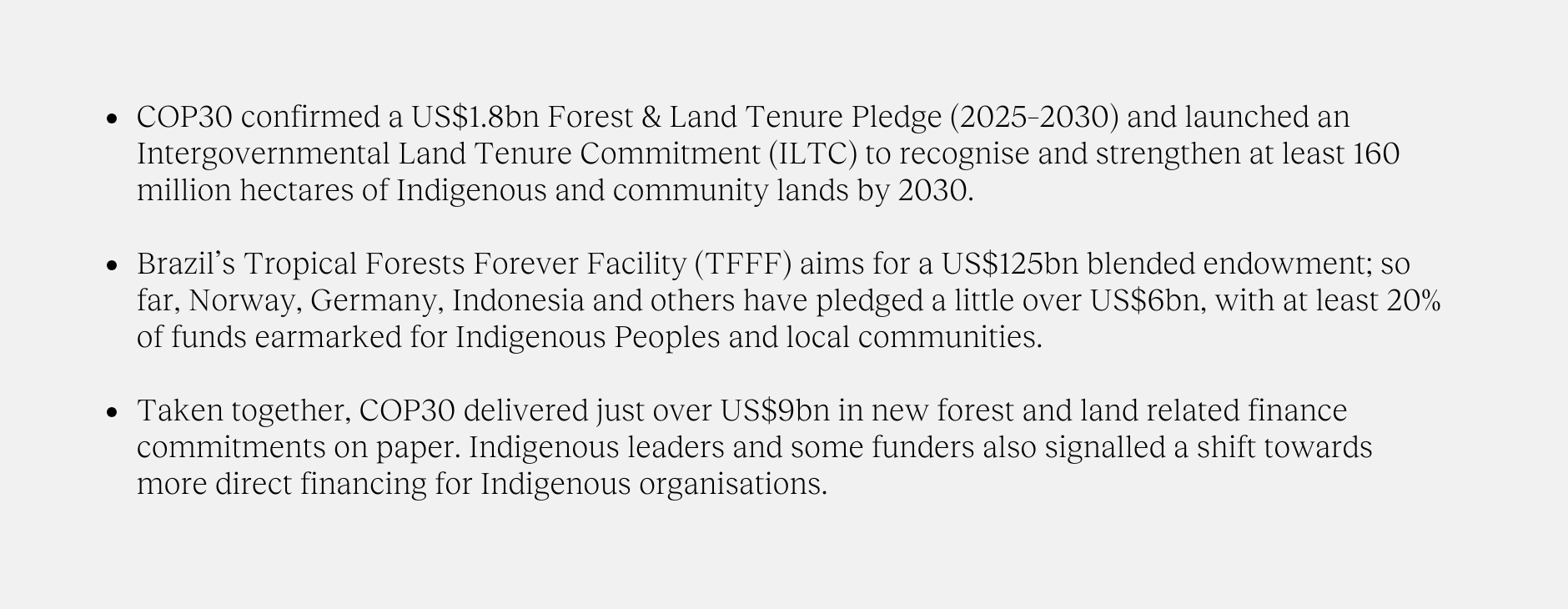
  • Finance tripled (but delayed): Governments and funders confirmed over US$9 billion in new forest and land related pledges, including a US$1.8bn tenure pledge and a new Tropical Forests Forever Facility (TFFF), with at least 20% of TFFF funds reserved for Indigenous Peoples and local communities. 
  • But no roadmap for phasing out fossil fuels: At the last moment, the COP failed to adopt roadmaps for phasing out fossil fuels and ending deforestation; those are now being developed in voluntary processes outside the COP. 

For those of us working on climate and nature, the big takeaway is this: land rights and Indigenous governed territories are now formally recognised as climate solutions – but the fossil‑fuelled, extractive political economy that drives climate and nature loss remain largely unchanged.

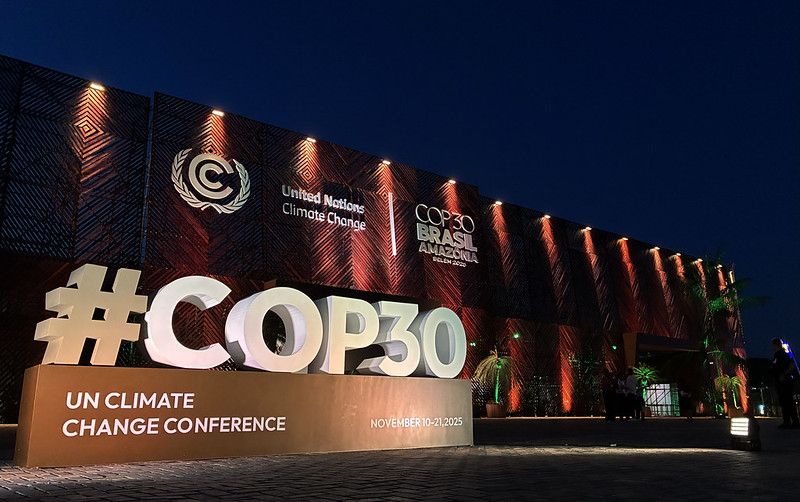
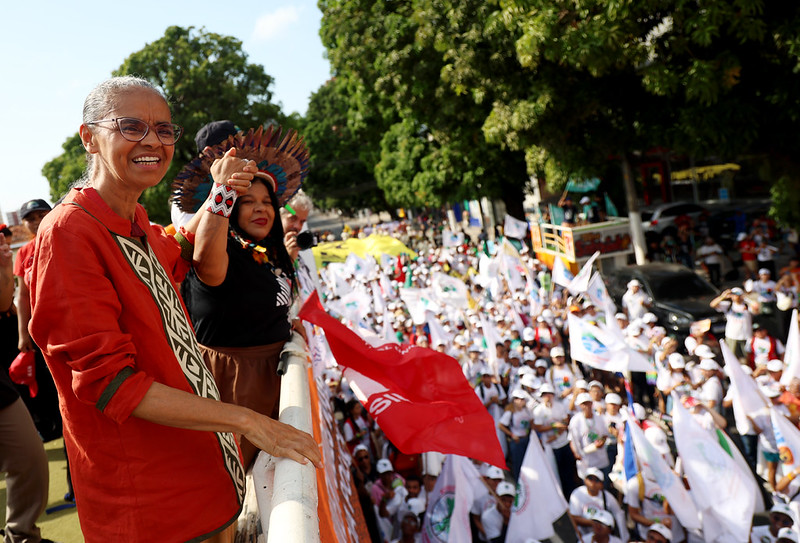
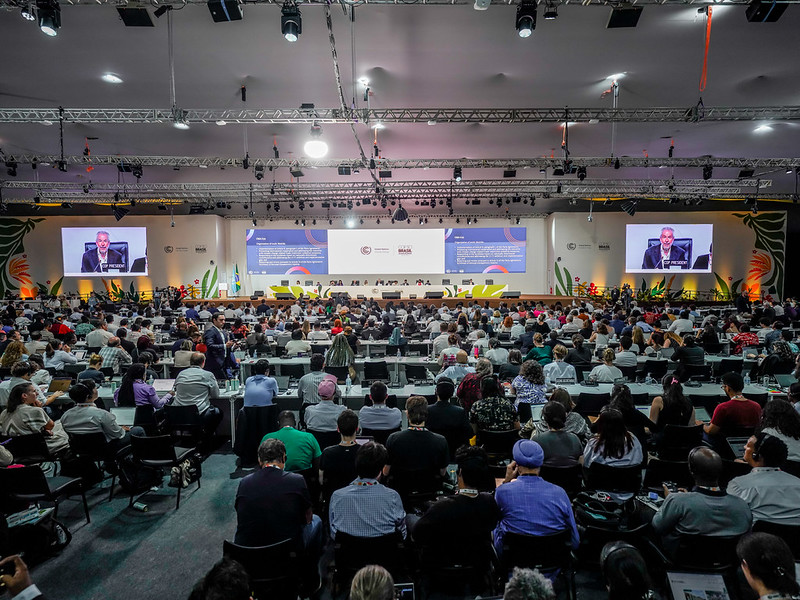
View from the Convention Center towards the COP30 dome. © Sergio Moraes/COP30. | Marina Silva, Minister of State for the Environment and Climate Change of Brazil, and Sonia Guajajara, Minister for Indigenous Peoples of Brazil, participate in the “Global Climate March” at COP30. © Aline Massuca/COP30. | COP30 Belém Amazônia closing plenary meeting. © Rafa Neddermeyer/COP30 Brasil Amazônia/PR.

2. Rights, justice and law in the core COP30 decisions 

2.1 Global Mutirão: rights and nature in the cover text

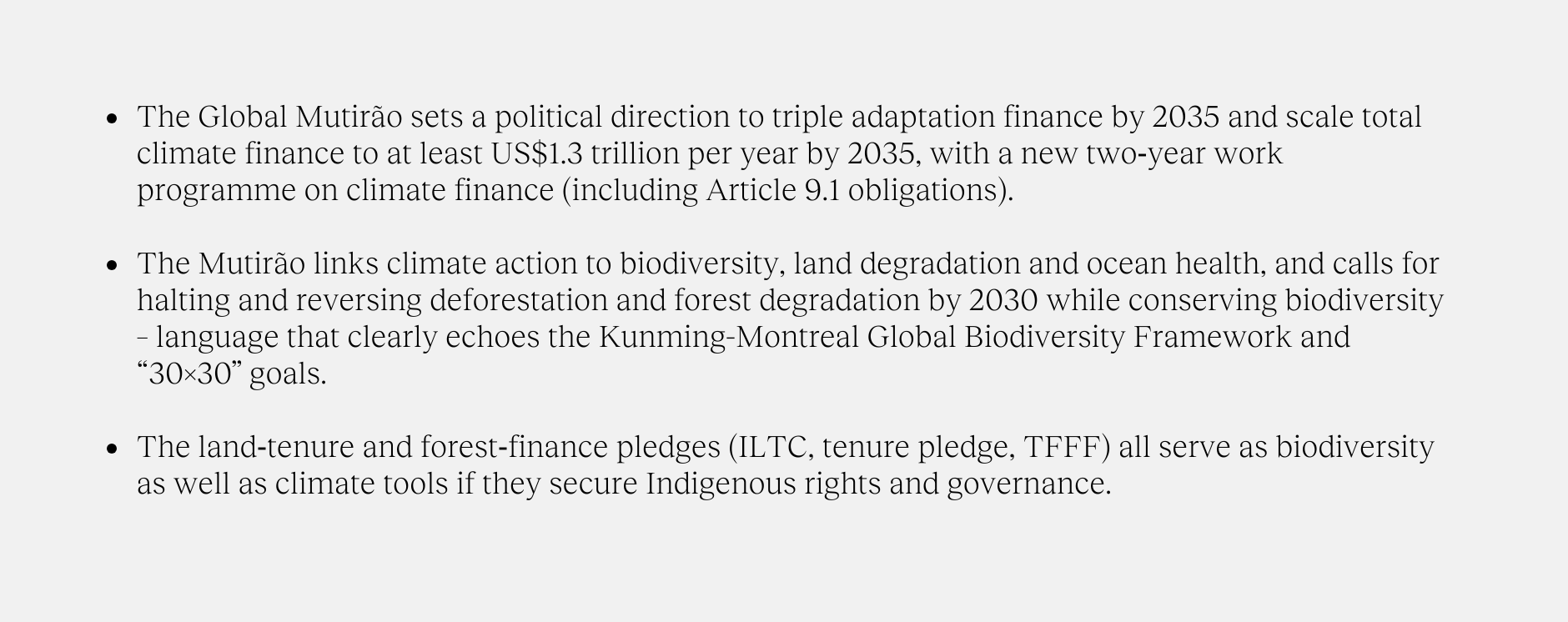
The Global Mutirão (from the Tupi-Guarani language, meaning “collective efforts”) is COP30’s main political outcome.  

  • It acknowledges that climate action must respect, promote and consider: 
    • human rights, 
    • the right to a clean, healthy and sustainable environment, 
    • the rights and land rights of Indigenous Peoples and their traditional knowledge, 
    • the rights of local communities, migrants, children, persons with disabilities, people in vulnerable situations, and the right to development, plus gender equality and intergenerational equity.   
  • And emphasises that Parties must conserve, protect and restore nature and ecosystems, including by halting and reversing deforestation and forest degradation by 2030, while conserving biodiversity and upholding social and environmental safeguards.   

These may sound like fluffy words, but it’s a big shift: it’s the first time a climate COP cover decision explicitly links Indigenous land rights and knowledge to climate action in this way. 

However, references to fossil fuel and deforestation roadmaps were stripped out during the final days. COP30 ended without a UN mandated plan to phase out fossil fuels or end deforestation – a major frustration for many. 


Useful links

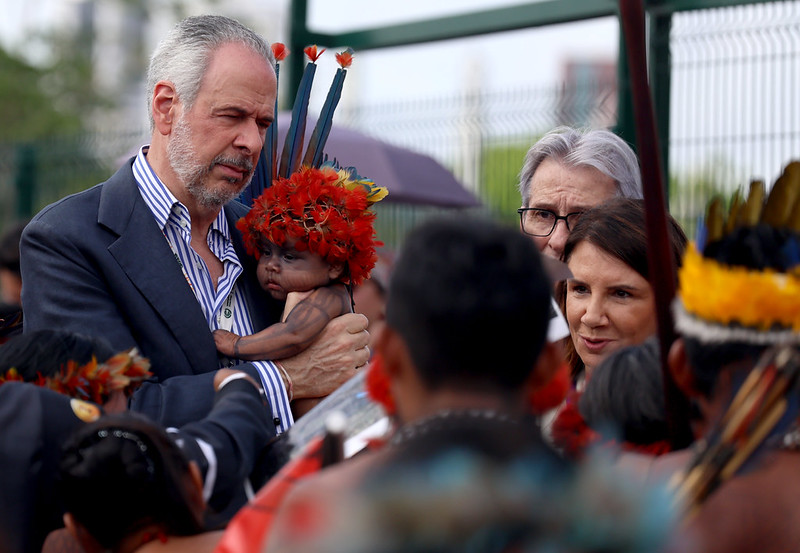
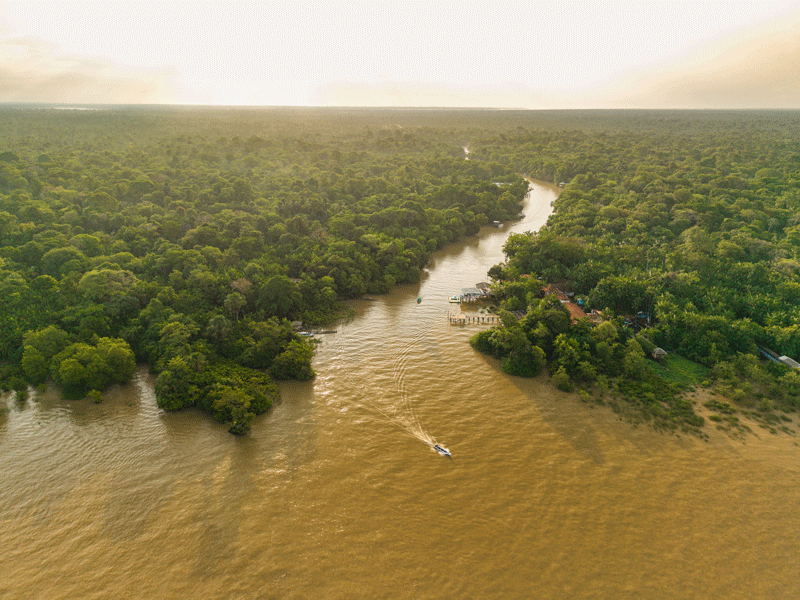
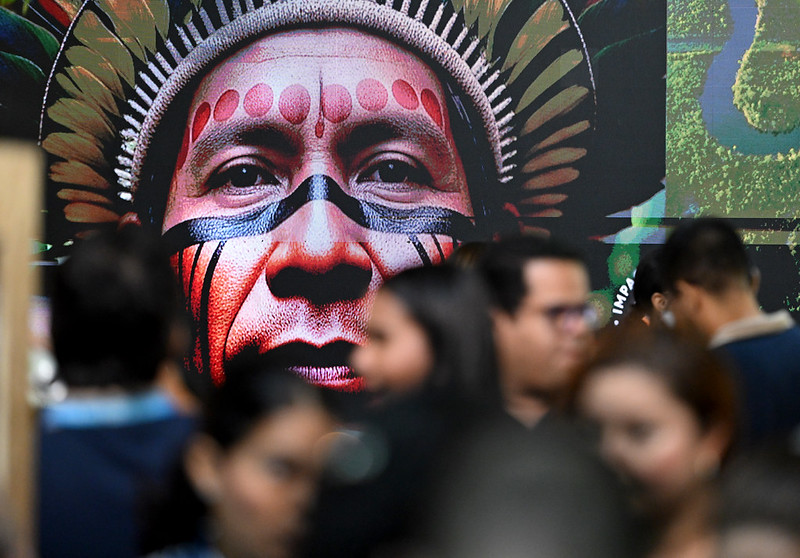
COP 30 President André Correa do Lago carries a Munduruku baby as he speaks with Indigenous Peoples at COP30. © Aline Massuca/COP30. | Belém, Gateway to the Amazon. © Ori Junior. | Visitors in the Green Zone corridor at COP30. © Alex Ferro/COP30.

2.2 Just Transition Mechanism: strong rights, silent mining

COP30 agreed to develop a new Global Just Transition Mechanism (JTM) under the Just Transition Work Programme – one of the clearest rights wins. The final text: 

  • States that just transition pathways must respect and promote the collective and individual rights of Indigenous Peoples, including the right to self-determination, in line with UNDRIP. 
  • Recognises rights and protections for Indigenous Peoples in voluntary isolation and initial contact – crucial for parts of the Amazon and Chaco. 
  • Affirms the need for free, prior and informed consent (FPIC) in climate related decisions. 

Commentators call this the most progressive rights framing yet in a COP “just transition” decision. 

What’s missing: 

  • Draft language on the social and environmental risks of critical mineral extraction (lithium, cobalt, etc.) did not survive into the final text, even as mining pressure on Indigenous territories accelerates.   
  • The JTM itself doesn’t explicitly mention the need to transition away from fossil fuels, even though that’s the entire point of a just transition. 

In terms of Indigenous Peoples’ rights, the JTM is a contested arena: its mandate is strong on rights but steps for implementation are lacking. 


Useful links

2.3 Knowledge, gender and justice

Beyond the big cover text, three crosscutting decisions are important for Indigenous rights and justice: 

  • LCIPP (Local Communities and Indigenous Peoples Platform) 
    • A COP30 decision on the LCIPP strengthens engagement of local communities alongside Indigenous Peoples and encourages integration of Indigenous knowledge into adaptation, mitigation and loss and damage plans. 
    • It’s incremental but useful: LCIPP is still the main formal space for Indigenous knowledge inside the UNFCCC. 
  • Belém Gender Action Plan 
    • COP30 adopted a new nine-year Gender Action Plan, recognising intersecting discrimination faced by Indigenous, rural, Afrodescendant and disabled women, and including commitments related to women environmental defenders (health, safety, decent work, violence). 
    • For Indigenous women on the front lines of land defence, this is another legal hook (if implemented). 
  • Information integrity 
    • A newer theme at COP30 was climate disinformation and information integrity. 
    • The Declaration on Information Integrity on Climate Change establishes shared international commitments to address climate disinformation and promote accurate, evidence-based information on climate change issues. It commits signatories to promote the integrity of information related to climate change in line with international human rights law and the principles of the Paris Agreement. 
    • UNESCO and the Government of Brazil launched the Global Initiative on Information Integrity on Climate Change to tackle disinformation, greenwashing and misleading advertising. 

Useful links

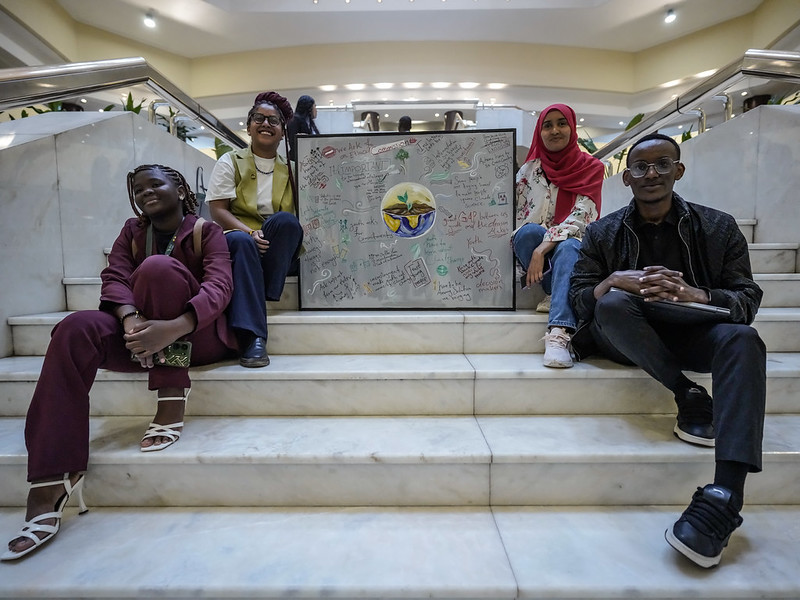
BEG Self-organised Youth. © Rafa Neddermeyer/COP30 Brasil Amazônia | Deforestation in the Peruvian Amazon. © Gino Tuesta | Indigenous participants in the Green Zone at COP30. © Alex Ferro/COP30.

3. Land, forests and finance: big numbers, big questions


3.1 Forest & land finance – ILTC, tenure pledge, TFFF

COP30 saw a cluster of significant forest and land rights. 

  • Forest & Land Tenure Pledge 2.0 
    • Around US$1.8 billion (between 2026–2030) in public and philanthropic funding to support Indigenous and local community land and forest tenure. 
    • Funders say they intend to channel more money directly to Indigenous organisations, not only large intermediaries.   
  • Intergovernmental Land Tenure Commitment (ILTC) 
    • 36 Governments (and partners) aim to recognise and strengthen at least 160 million hectares of Indigenous Peoples’ and local communities’ lands by 2030, led by Peru, Norway and Brazil. 
    • This is a major bridge between climate and biodiversity goals (including meeting the “30×30” target of the Global Biodiversity Framework, which commits to protecting and conserving 30% of the worlds land and oceans by 2030). 
  • Tropical Forests Forever Facility (TFFF) 
    • Brazil’s flagship initiative is a blended finance facility with a US$125bn target (US$25bn public/philanthropic “sponsor” capital + US$100bn private funds).   
    • It’s a “payment-for-performance” model that uses satellite monitoring technologies to reward tropical forest countries with a continuing source of funding as long as they preserve their forests. 
    • So far, countries including Norway, Germany and Indonesia have pledged a bit over US$6bn – far short of the ambition, but not still significant. 
    • At least 20% of TFFF resources are reserved for Indigenous Peoples and local communities, with Indigenous networks pushing to raise that share and secure seats in governance. 
    • Taken together, these add up to >US$9bn in new forest and land finance commitments across multiple initiatives. 

Useful links


3.2 Brazil’s demarcations: climate policy in practice

Brazil used their “home COP” to showcase local progress on Indigenous territorial rights: 

  • Demarcation of 10 new Indigenous lands, mainly for Mura, Tupinambá de Olivença, Pataxó, GuaraniKaiowá, Munduruku, Pankará and GuaraniMbya Peoples.  
  • This includes the vast Kaxuyana Tunayana land in Pará (22 million ha of old growth forest, roughly the size of 3 million soccer pitches). Kaxuyana elders had been forcibly airlifted from this forest by the military regime in the 1960s; some lived to see their homeland finally recognised in Belém, alongside territories hosting two uncontacted peoples.   
  • In total, 21 Indigenous lands have been recognised under President Lula, bringing officially recognised Indigenous territories to over 117 million ha (13.8% of Brazil’s territory). 

These are real climate and biodiversity wins – but Indigenous leaders pushed (unsuccessfully) for COP30 to explicitly recognise demarcation of Indigenous lands as climate policy in the formal agenda. That push was blocked. 


Useful links

3.3 Contested finance solutions and community control

Indigenous and civil society organisations are not united behind TFFF and related instruments: 

  • Hundreds of Indigenous and civil society groups publicly rejected TFFF, warning that it risks: 
    • financialising forests, 
    • relying on volatile markets and offset style logic, 
    • failing to shift power towards Indigenous and local community governance. 
  • As a response, Brazil carried out a co‑design process with the Global Alliance of Territorial Communities (GATC) which led to a requirement that countries allocate at least 20% of TFFF payments to Indigenous Peoples and local communities.  
  • But the basic architecture was unchanged – it’s a blended-finance investment fund that lacks Indigenous presence/voting on the main boards and fails to remedy power imbalances. 

Similar critiques are directed at some carbon market schemes, biodiversity credits and “nature based solutions” that can lead to landgrabs and “green” dispossession if FPIC and land rights are not front and centre. 


Useful links

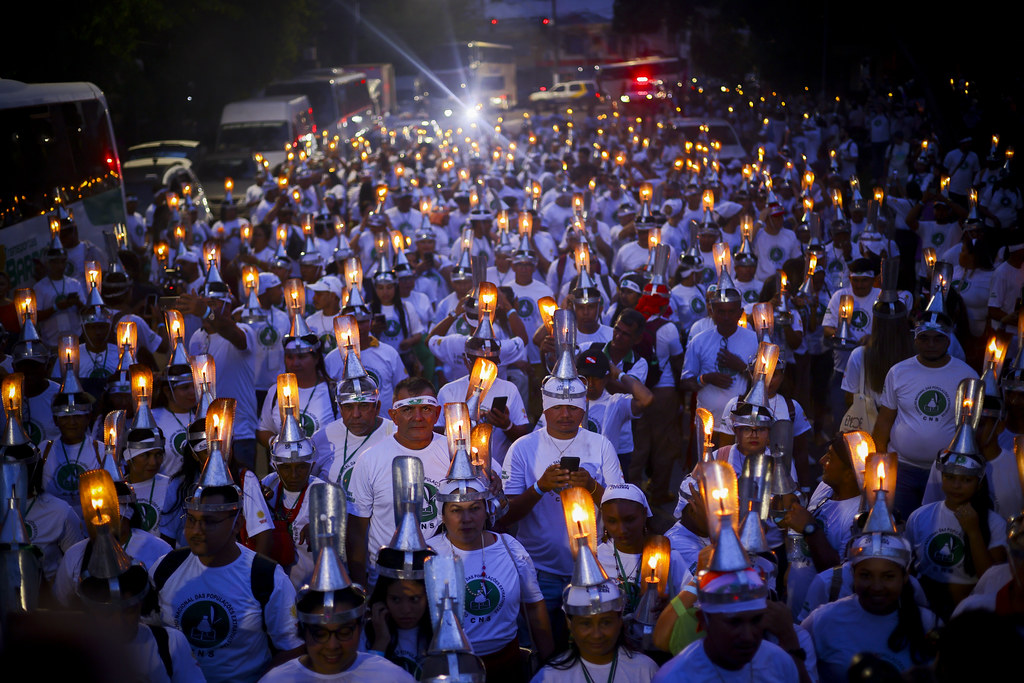
Activists during the "Porongaço" march of the Forest Peoples. © Ueslei Marcelino/COP30 | Photo exhibition at COP30. © Raimundo Paccó/COP30.

4. Climate finance for nature & biodiversity 


4.1 Links to the Global Biodiversity Framework

COP30 doesn’t live in a vacuum. It sits alongside the Kunming–Montreal Global Biodiversity Framework (GBF) agreed under the Convention on Biological Diversity (CBD), which commits countries to: 

  • halt and reverse biodiversity loss by 2030, 
  • protect at least 30% of land and sea (“30×30”), 
  • restore 30% of degraded ecosystems, 
  • and mobilise US$200bn/year for biodiversity by 2030, including substantial flows to developing countries. 

For Indigenous Peoples and nature, three COP30-CBD overlaps are worth noting: 

  1. Land and forests pledges = biodiversity implementation tools 
    • The ILTC’s 160 million hectares of Indigenous and community lands and the US$1.8bn tenure pledge both directly support GBF Target 3 (30×30) if they secure rights and strengthen Indigenous governance rather than impose new fortress conservation. 
    • TFFF and other forest finance mechanisms are also being pitched as serving both Paris and Kunming–Montreal goals. 
  2. Nature language in the Mutirão decision 
    • The Mutirão explicitly links climate action to biodiversity, land degradation and ocean health, and calls for halting and reversing deforestation by 2030 while conserving biodiversity, echoing GBF targets. 
  3. Rio Conventions synergy track 
    • Parties adopted a fairly slim decision that recognised the importance of cooperation between the three Rio Conventions (UNFCCC, CBD and UNCCD), requested the Secretariat to strengthen its engagement in the Joint Liaison Group and invited submissions on how to enhance cooperation. 
    • This doesn’t help much towards achieving genuinely integrated climate–nature–land governance, it’s essentially a “keep talking” placeholder. 

4.2 Guardians of the Climate: Financing Indigenous Leadership

While Indigenous Peoples’ leadership on climate and nature is apparent across the globe, urgent reforms are needed to make climate finance more accessible, equitable, and aligned with Indigenous rights and self-determination. A coalition led by the Elatia network and Indigenous Livelihoods Enhancement Partners (ILEPA), in partnership with UN High-level Climate Champion Razan Al Mubarak, and partners launched Guardians of the Climate: The Global Study on Indigenous Peoples’ Climate Contributions and Trends in Access to Climate Finance. 

  • The study details the effectiveness of Indigenous-led climate solutions, including over 700 case studies which reveal how Indigenous Peoples’ territories across forests, grasslands, wetlands, mountains and coasts tend to have lower deforestation and richer biodiversity, while storing huge amounts of carbon. 
  • It demonstrates that only a tiny share of climate finance reaches Indigenous organisations directly, despite their outsized role in protecting nature and climate. 
  • It calls for direct, long-term, rights based finance and protection for Indigenous defenders. 


Useful links

5. Fossil fuels and deforestation: the missing roadmaps 
 

5.1 Brazil’s Voluntary Roadmap Process (COP30 Presidency)

Land protection and Indigenous Peoples’ rights were hailed as bright spots at COP30, but fossil fuels and deforestation were relative disappointments.  

Because consensus wasn’t reached on binding language to phase out fossil fuels or end deforestation, Brazil, Colombia and the Netherlands are now leading voluntary processes outside the COP to develop roadmaps on fossil fuels and deforestation  

As COP30 president, Brazil announced that it will develop two voluntary, nonbinding global roadmaps outside the formal UNFCCC decision text: 

  • Roadmap on transitioning away from fossil fuels: The proposed UNFCCC roadmap to transition away from fossil fuels was backed by over 80 countries, but removed from the Mutirão text at the last moment after opposition from Russia, Saudi Arabia and others. Brazil has committed to deliver this roadmap by COP31 in 2026 (Turkey), using the time it remains as COP president to draw on technical studies and multi-stakeholder input. 
  • Roadmap on halting and reversing deforestation: A parallel roadmap to end deforestation also failed to make it into the final decision, despite the Amazonian setting. Again, a voluntary, science‑based roadmap will be led by the Brazilian presidency, intended to mirror the fossil‑fuel roadmap as a parallel track on forests and land use.  


5.2 Santa Marta Fossil Fuel Conference (Colombia and The Netherlands)

In parallel – and reacting to the same blockage at COP30 – Colombia and the Netherlands announced a new international conference specifically on the just transition away from fossil fuels.  

  • The First International Conference on the Just Transition Away from Fossil Fuels will be held 28–29 April 2026 in Santa Marta, Colombia. 
  • It’s intended to provide a broad intergovernmental and multi‑stakeholder platform that will identify legal, economic and social pathways to phase out fossil fuels in a way that is “fast, fair and fully financed”. 
  • Framed as a complementary process that will support and feed into COP31. 

This means the struggle over extractivism (oil, gas, mining, agribusiness) is now being fought across two fronts: inside the COP – where petrostates still wield veto power; and in looser “coalitions of the willing” and voluntary roadmaps – where there may be more room for ambition, but fewer formal safeguards and accountability. 


Useful Links

6. So what? Implications for climate, nature and justice work 


Pulling this together, here are some practical implications for anyone working on climate, nature, law or finance: 

  1. Land rights are now treated as core climate and nature policy 
    • Supporting legal recognition and protection of Indigenous territories is now squarely part of delivering both the Paris Agreement and the GBF.   
  2. Follow the money – and push for direct access 
    • It’s going to be important to track whether the US$1.8bn tenure pledge, TFFF and other forest funds actually do deliver direct, flexible finance to Indigenous and community organisations, including women’s and youth groups. 
  3. Use the new legal hooks 
    • The Mutirão’s rights language, the JTM’s FPIC provisions, the Belém Gender Action Plan and the ICJ advisory opinion all offer legal and advocacy tools that can be used in domestic law, regulation, litigation and policy reform. 
  4. Connect climate and biodiversity work around Indigenous governance 
    • When implementing climate or biodiversity projects (NDCs, NBSAPs, 30×30, restoration), treat Indigenous governed territories and knowledge systems as the starting point – and align funding and governance accordingly. 
  5. Watch the roadmaps outside the COP 
    • The new voluntary coalitions on fossil fuels and deforestation could either raise ambition or become talk shops. Indigenous Peoples and allies will need to ensure rights and justice are nonnegotiable aspects in shaping their design. 

The COP30 outcomes line up closely with the questions we’re asking at Pollination Foundation: how do we move from ambition on paper to direct, long‑term funding for Indigenous‑led, place‑based nature economies?  

By 2023, our goal is to help flow around US$500 million per year directly into nature solutions with Indigenous leadership and equitable partnerships at their heart, building durable, locally‑governed economies rooted in Country, land and seascapes.  

In practice, for us this means: 

  • Backing place‑based nature economies. We’re working with Indigenous partners to seed and grow locally‑led “nature economies” – ecosystems of enterprises where governance and data stay in community hands. We’re helping to shape nature credit and other nature‑finance mechanisms so they are Indigenous‑led, rights‑based and fit for long‑term stewardship, not short‑term projects.  
  • Building readiness and relationships across Indigenous Nations, investors and philanthropy. COP30 showed that the world is still figuring out how to align climate, nature and justice. We are working to grow the kind of partnerships and practical tools that make it easier for Indigenous Nations, investors, corporates and philanthropies to walk into equitable joint ventures with eyes open – from readiness workshops, to peer‑to‑peer networks, to spaces like Nature Finance Collectives that align capital and bring Indigenous leaders and finance together on equal footing. 
  • Pollinating ideas and stories that shift systems, not just projects. Through Campfire Studios, Nature Finance Collectives, and our broader “pollinating for systems change” work, we connect place-based leaders to share what’s working, learn while doing and amplify stories of impact. The aim is to give others the confidence and practical insight to replicate Indigenous-led nature finance solutions – always in ways that honour Indigenous Cultural and Intellectual Property and recognise First Nations’ ownership of their knowledge, stories and protocols.  

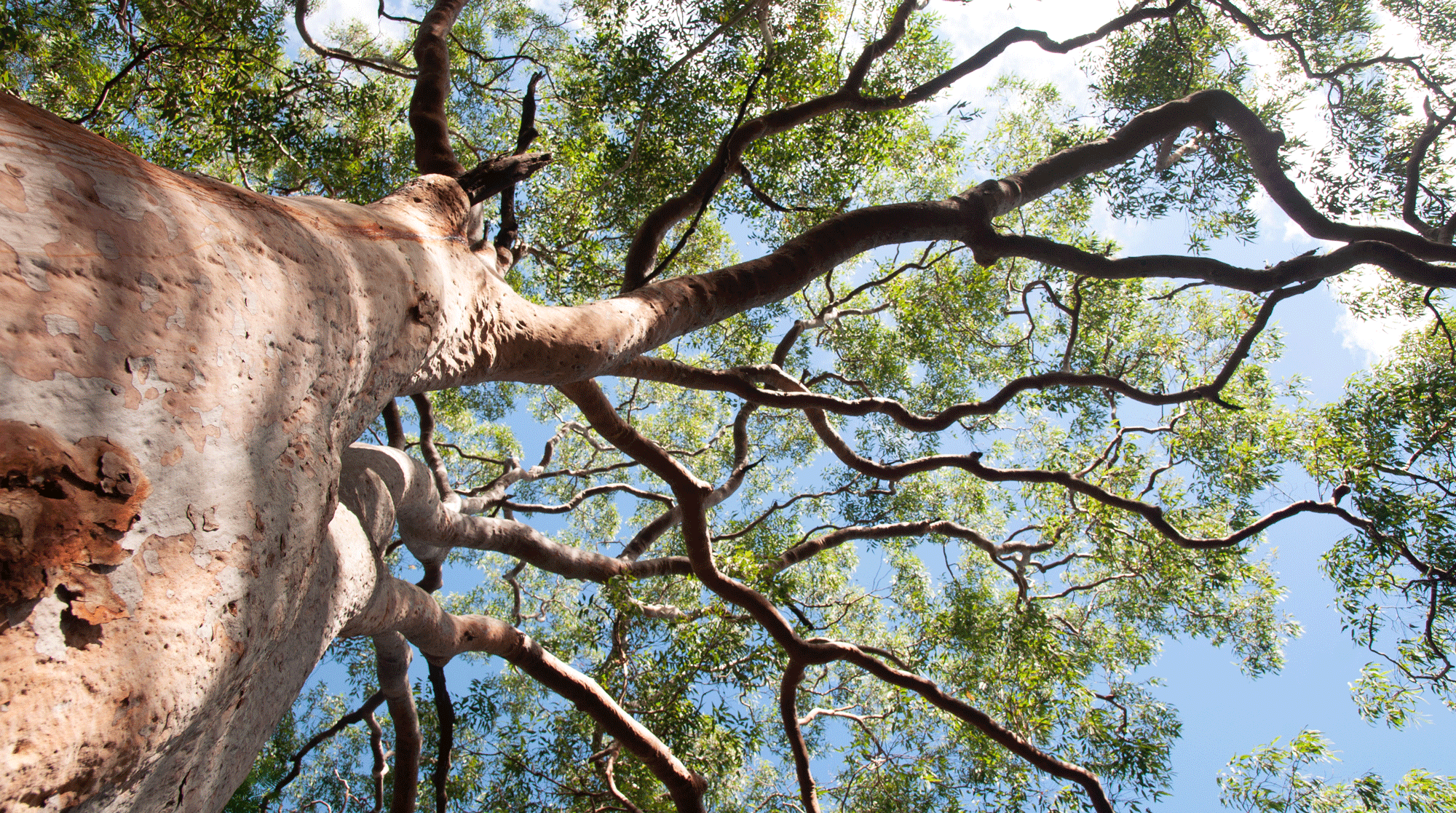
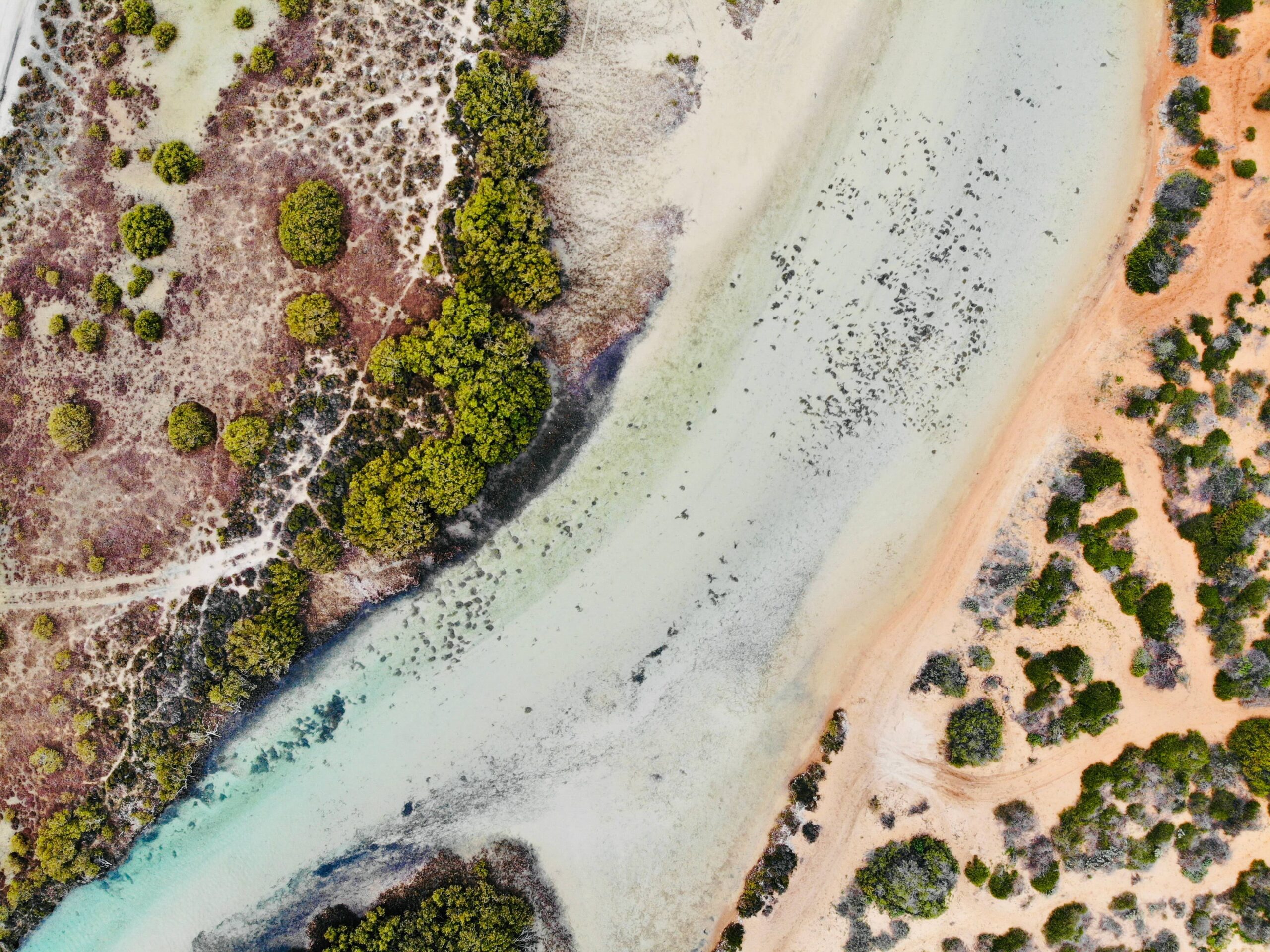
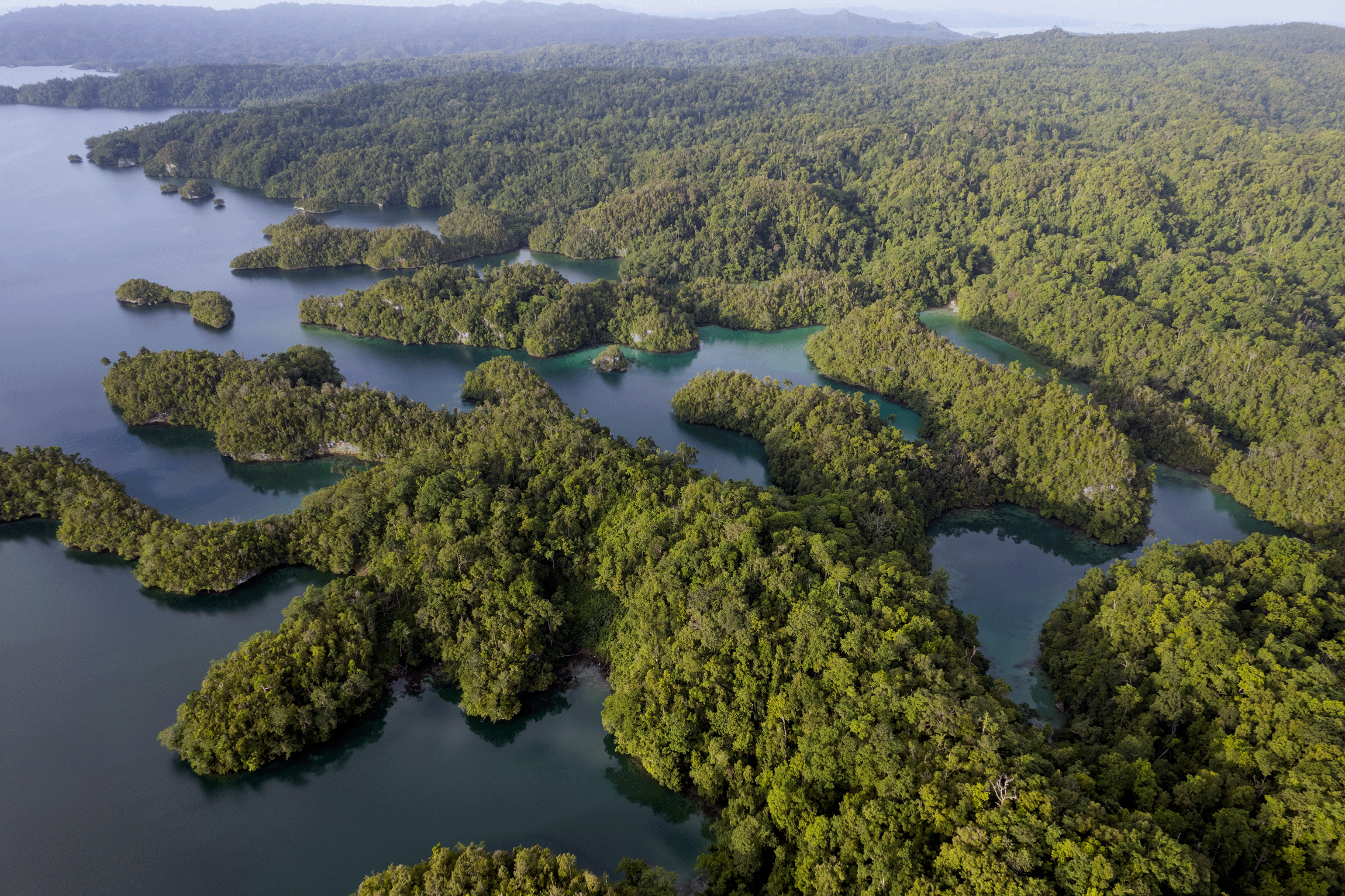
Eucalyptus Tree, Sydney Australia. © Bettapoggi | Aerial outback view, Australia © Jonathan | Aerial view of Gam island, Raja Ampat Indonesia. © Anemone

7. What’s Next?

 COP 31 will convene in Antalya, with Türkiye serving as the COP 31 President-Designate, organising the World Leaders Summit, appointing the High-Level Champion and the Youth Champion, and leading the Action Agenda. Australia will play a role as “President of Negotiations” and will host a pre-COP in the Pacific. 

share

Pollination in the news

READ News

Join our Mailing List

CONNECT WITH US

Please provide your details below to access the report

    By clicking submit, you agree to our Terms & Conditions.