



Deep partnerships that heal nature, people and planet.

25 August 2026 / WORDS BY Pollination Foundation
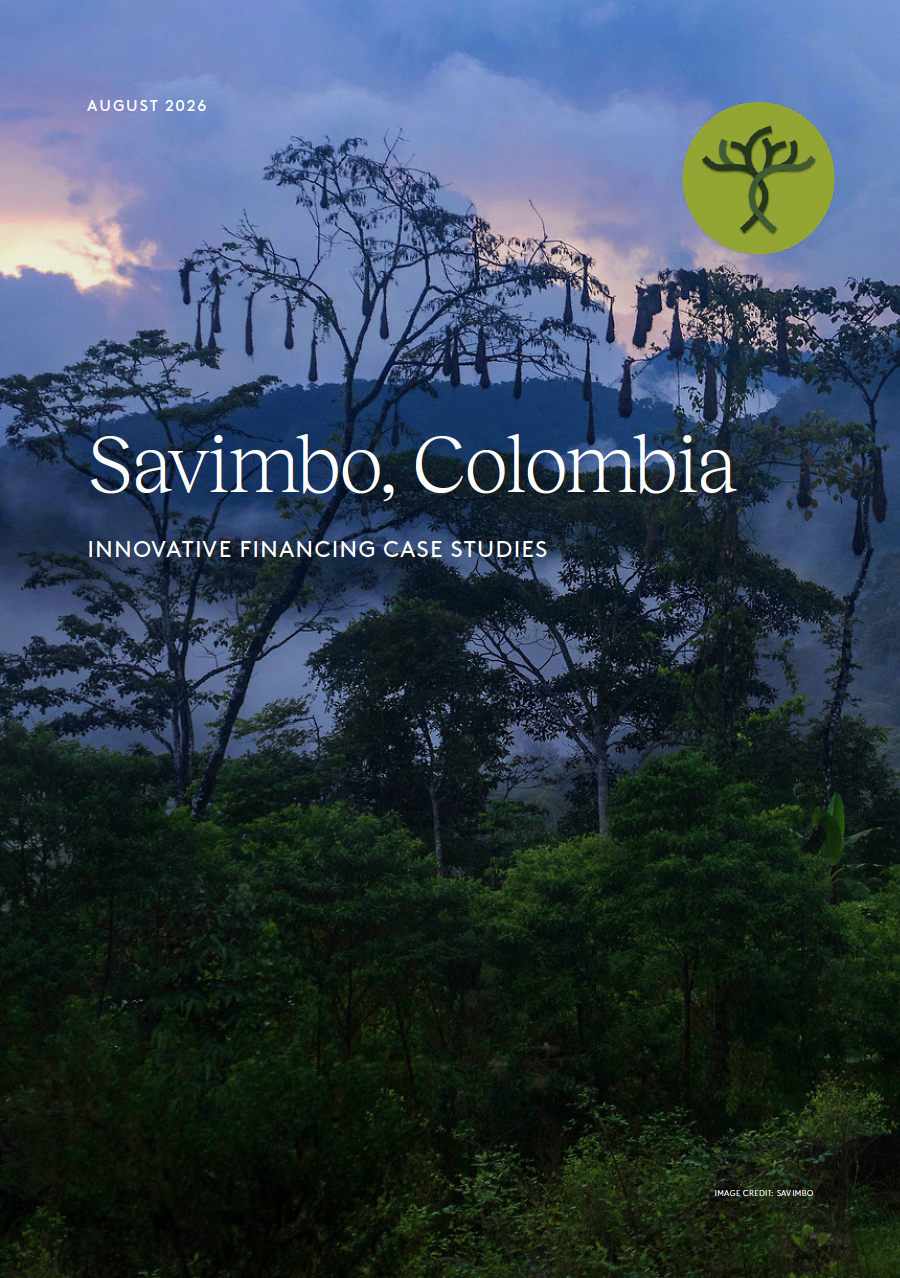
Our latest innovative financing case study explores Savimbo, a social enterprise created “by, and for” Indigenous Peoples and local communities, which helps communities earn income by protecting forests and wildlife across the Colombian Amazon, Panama and Ecuador.
Savimbo’s biodiversity credits represent the conservation of a specific ecosystem area over a defined period. Each credit is backed by evidence – such as geolocated photographs, video, audio or camera-trap records of indicator species – that is independently verified and recorded on a registry. Importantly, the credits are sold as contributions to biodiversity protection, not as offsets that allow damage elsewhere to be cancelled out.
The model combines scientific integrity with community knowledge and practical monitoring. Communities help select culturally and ecologically meaningful indicator species, retain ownership of their data, undertake local monitoring and negotiate how revenue is shared. Savimbo’s Kapital payment system can distribute funds transparently to individual stewards, community funds and shared projects – even where they have not previously been set up to receive finance.
The case study looks beyond the sale of credits to examine the practical “engine room” that makes the model work: land and stewardship rights, Free, Prior and Informed Consent, community governance, data collection, independent verification, transparent payments and safeguards against greenwashing.
Download the case study below.
Receive latest news and global perspectives from Pollination Foundation.
"*" indicates required fields
By clicking submit, you agree to our Terms & Conditions.